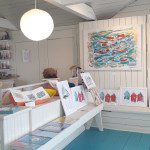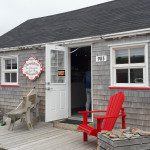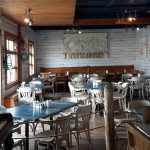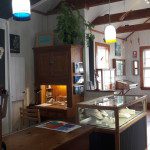
Since their nomination as a CreativeFriendlyDestination in 2018, the Îles de la Madeleine (Magdalen Islands) have cemented themselves as a model for creative tourism destinations worldwide. Caroline Couret, director of the CreativeTourismNetwork®, tells us more about their evolution.

You’re just coming back from the Îles de la Madeleine, can you share your experience with us?

Of course, but, as you know, this is kind of a twofold challenge. Firstly, because you never really leave the islands – the magnetism that surrounds the land, the peculiar insular character, and the friendly disposition of the Madelinots are such that you always leave a part of you behind. The connection you make with the islands are so strong that it lingers even once you’ve left, and you immediately want to plan your next trip there. Furthermore, every experience is unique and as such, it’s quite hard to put it into words, but I will describe mine as well as I can.

What are the features that make the islands unique?

When you get there – by plane or boat – you immediately get a strong sense of singularity: this place is unique, you think, so unique that you just know this experience will be different from everything you’ve lived before. It’s quite rare, you see, for avid travels, to discover a destination that is singular in every way. It’s quite difficult to explain, because you get this feeling from a combination of many intangible elements and emotions that, although personal, are all part of this experience.

Whether the artists are born Madelinots or came for its inspiring atmosphere, they make up a substantial part of the population, in numbers, in diversity, and in quality.

More precisely, what would these elements be?

First of all, the islands’ natural beauty! This is also quite a rare feat. The last decade has been spent by cities on trying to distinguish themselves in every way, many of them artificial, as if it was a race. Now, our societies are seeing a change in values, and a growing interest for intangibility and authenticity. This is definitely a stand-out element that the Îles de la Madeleine can use to their advantage: they attract people by being natural. Among these feats, there is also the locals’ sense of hospitality and their welcoming nature.

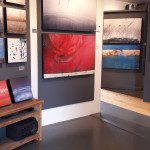
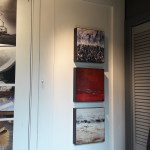
Creatively speaking, I can only admire the islands’ stupendous artistic potential. Whether the artists are born Madelinots or came for its inspiring atmosphere, they make up a substantial part of the population, in numbers, in diversity, and in quality.

Let’s talk more about this offer in creativity. Can you give us some examples of it?

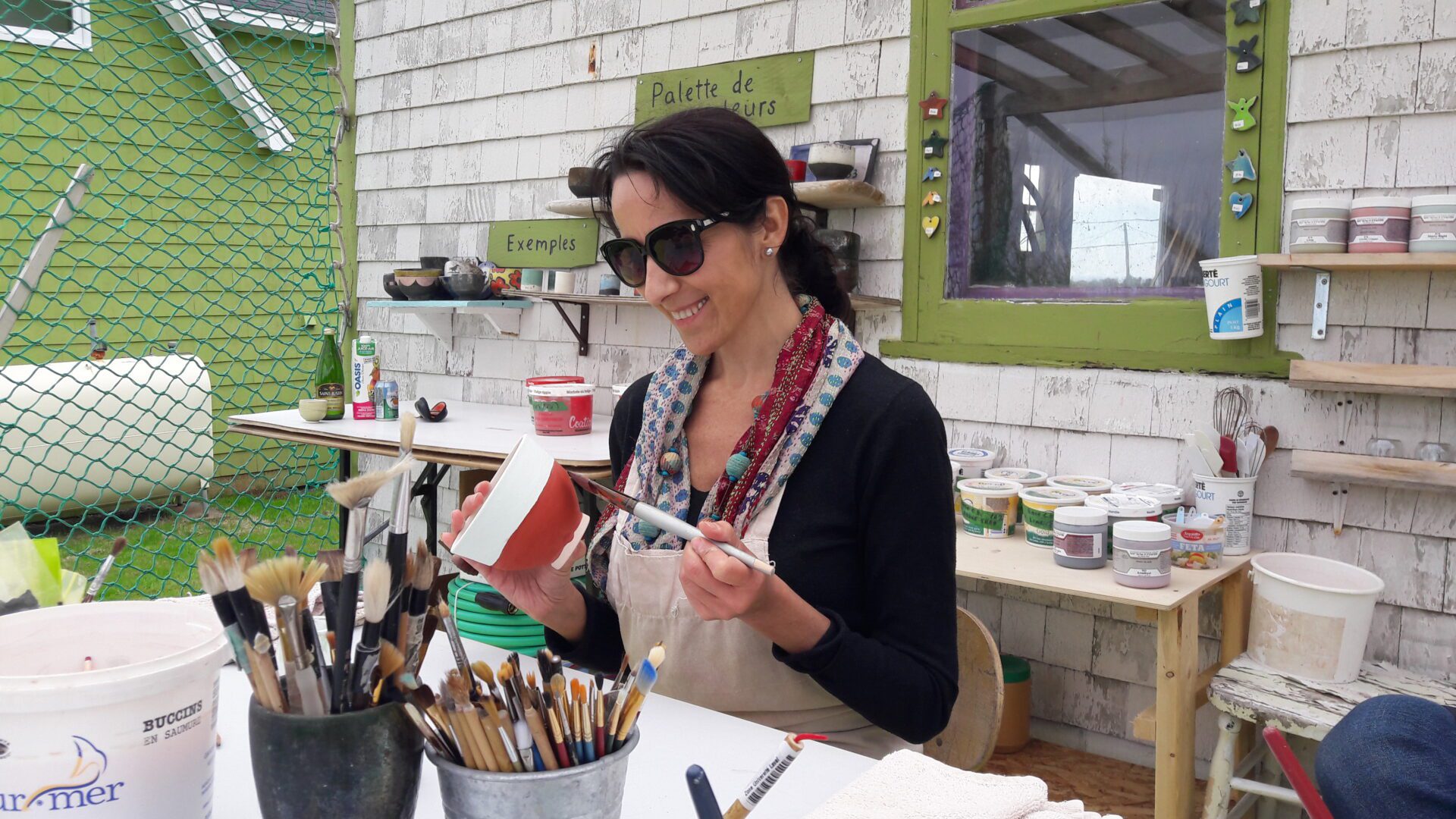
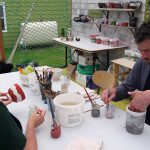
There are so many creative experiences that I’m tempted to talk about all of them, but this would take a while! As such, I invite you to take a look at the CreativeTourismNetwork®’s website and social media, on which we regularly publish articles and news that recount beautiful human and creative encounters. But overall, I’d say that all arts and creative sectors are represented, and the creations are an ode to the local nature and culture. The offers range from cooking classes to pottery and soap making workshops, essential oils workshops, classes on how to make candles and blown glass… Sometimes these even intersect – indeed, co-creating is very present on the islands, where artists like to cross their viewpoints and talent in order to provide us with brand new, unusual artistic experiences. This is something worth noting: every artist has and showcases another’s art pieces. Sometimes, temporary collaborations are also organized: during the nights of the “Contes en Îles” festival (Tales of the Islands), you can see Annie Morin’s wooden sculptures as a centre piece. You can also experience the Folles Virées Gourmandes (Crazy Tasty Trip), an event that gathers an enthusiastic crowd around cultural and festive activities where art and gastronomy merge to create a unique show.

On the Îles de la Madeleine, all the experiences form a narrative that stays true to the locals’ feeling of belonging.

Are these activities available to all?

Absolutely. All of them are based on a common denominator: the desire to share that the Madelinots instil in all of us! All creative tourists, from all backgrounds and profiles are welcome – from seniors, millennials, individuals, groups, couples, families, people who want to escape on a resort or an artistic retreat… Travel agencies and organizations can also find the best offers for their clients. Some activities have only just been implemented and they’re already successful. The locals also join them. It’s hard to find a better guarantee of quality.

Do you think there is a formula for this success that could be applied to other destinations?

I would indeed say that the ïles de la Madeleine are a role model for other destinations that want to implement a form of tourism that is creative, attractive for the new generations of tourists, and beneficial for the territory and the locals. However, it isn’t a model you can “copy” – each city, town, or village, and its infrastructure is unique. Each destination must draw on its own resources and features, be it natural, cultural, human, or creative.

In your opinion, among the good practices of the islands, which ones should be adopted by the destinations that try to become creative?

First of all, they should focus on quality, which is the number one distinguishing feature. Activities should also be authentic and reflect the destination’s DNA – this gives meaning to the experience, helps understand local culture and hence enjoy and value it. On the Îles de la Madeleine, all the experiences form a narrative that stays true to the locals’ feeling of belonging. Furthermore, uniting artists and creators who are eager to share their knowledge contributes to the creation of a climate that favours exchange and sharing. I had the chance to meet several of them, and I want to underline how happy they are to collaborate in this project. Their vision is clear on the limits of these tourist activities, and how the natural ecosystem of the islands has to be preserved.

Another quality I’ve rarely seen in other destinations: they all are very close. Every artist will only briefly talk about themself before switching to their colleague’s work. This rather exceptional feature contributes to creating synergies, and it is a virtuous circle in which creative tourism is carried by a positive energy. Hence, networking and creating a value-chain supplants competing against one another.

The region is full of artists who are talented, passionate and have the entrepreneurial vision that’s needed to promote their project by making it profitable while respecting their philosophy and their convictions.

How can destinations run such a program?

The key element is people, their diversity and creativity, but of course, a federating element that structures and facilitates the process is also needed. This way, synergies are created, and a global approach and direction is given as to maximize a destination’s potential. In our present case, Tourism des Îles de la Madeleine, the Destination Management Organization (DMO) and the Island’s Tourism Cluster in insular context, are the one that undertakes the role of creators, facilitators, and interlocutors for all the local actors. Again, this has been demonstrated to be a successful formula. The synergy between them and the local stakeholders generates positive results at every moment of the process. The development of creative tourism is possible, firstly because the region is full of artists and artisans who are talented, passionate and have the entrepreneurial vision that’s needed to promote their project by making it profitable while respecting their philosophy and their convictions.

Secondly, the tourist cluster is also remarkably active networking-wise, as they develop collaborations with neighbouring Quebec regions such as the Laurentides, with whom it starts projects that aim to support innovation and stimulate corporate competition. Internationally, it’s a great honour for the Creative Tourism Network® to count the islands as one of our partners, especially since their evolution is so coherent. In 2015, the Îles de la Madeleine won the Best Tourism Strategy Award, that was awarded by the Creative Tourism Network®, and since then they have always shown their commitment and their expertise in strategy planning. Since the start of the official CreativeFriendlyDestination program in the islands in October 2018, the development of their project has been noticeably accelerated. I was really impressed to note that many artists used the colder months to put their creative project together, and develop infrastructures dedicated to them. So you understand why we’re so keen to promote them!

What is the next step?

On our side, we need to make demand and supply meet. This entails imagining the different profiles and cases that could attract new types of travelers to the islands. These travelers will, in turn, help extend the tourist season in a way that’s coherent and respectful to the will of the Madelinots to preserve their small paradise!
More about the Îles:

Visit our page.

Visit their website.

Share

Depuis leur nomination en tant que CreativeFriendlyDestination en 2018, les Îles de la Madeleine sont devenues un cas de bonnes pratiques et un modèle pour les destinations de tourisme créatif.  Caroline Couret nous en donne ses impressions.


Vous revenez des Îles de la Madeleine, pouvez-vous partager votre expérience ?

Avec plaisir, mais vous savez, il s’agit là d’un double défi ! Tout d’abord parce que l’on ne revient jamais vraiment des îles ! Le magnétisme des paysages, la singularité insulaire et le caractère attachant des Madelinots sont tels que l’on y laisse toujours une part de nous. Disons que le lien qui se créé avec les îles de la Madeleine est immédiat et perdure au-delà du séjour, en attendant le prochain ! Par ailleurs, chaque expérience est unique et de ce fait, assez difficile à partager.  Mais je vais bien sûr tenter de vous en faire part de ce vécu, du mieux possible.

Précisément, quels sont les atouts des îles, qui les rendent uniques ?

Tout d’abord, cette sensation très forte qui dès que l’on arrive – par air ou par mer – nous confirme que l’on est dans un lieu singulier au point de nous fait oublier tout ce que l’on a connu auparavant. Cela devient rare pour des voyageurs désormais “collectionneurs” de destinations, d’en trouver encore une qui ne leur ressemble en rien aux autres ! C’est assez difficile à expliquer, car il s’agit vraiment d’un ensemble d’éléments intangibles, d’émotions qui, bien que personnelles, se rejoignent unanimement sur ce point.

Qu’ils soient Madelinots d’origine ou créateurs attirés par l’atmosphère inspirante, les artistes représentent une partie importante de la population, en nombre, mais également en diversité et excellence.

Concrètement, à quoi cela ferait référence ?

Tout d’abord leur beauté, naturelle, sans artifices ! Là aussi, c’est rare. Nous venons de passer plus d’une décennie au cours de laquelle les destinations de tous types et en tous points du globe ont se sont évertuées à se démarquer par tous les moyens, souvent artificiels et forcés, comme s’il s’agissait d’une surenchère. Le transfert de valeurs qui opère au sein des sociétés actuelles, mettant en avant un intérêt croissant pour l’intangible et l’authenticité s’affiche désormais comme un élément différentiateur et octroie de ce fait un large avantage aux îles de la Madeleine ! On pourrait dire qu’elles séduisent, naturellement ! Et puis, il y a bien sûr parmi ces atouts, le sens de l’hospitalité et l’accueil légendaire des locaux. Là aussi, chaque expérience est inoubliable. Et puisque l’on parle de tourisme créatif, je ne peux être qu’admirative face à la grande richesse artistique des îles. Qu’ils soient Madelinots d’origine ou créateurs attirés par l’atmosphère inspirante, les artistes représentent une partie importante de la population, en nombre, mais également en diversité et excellence.

Parlons plus en détail de cette offre créative. Pouvez-vous nous donner des exemples ?

Il faudrait les citer tous et comme je le disais, ils sont nombreux. Aussi je vous invite à suivre les reportages que nous publions régulièrement sur les différents réseaux du Creative Tourism Network® et qui offrent de belles rencontres humaines et créatives. Mais globalement, je dirais que tous les arts et secteurs créatifs sont représentés et les créations rendent hommage à la nature et la culture locale. Cela va des cours de cuisine aux ateliers de poterie, de raku, de savon, en passant par la sculpture, la bijouterie, la distillerie d’huiles essentielles, la fabrication de bougies, de verre soufflé, ou encore de compositions à base de coquillages, la peinture sur bouées, la fabrication de châteaux de sable voire tout à la fois ! En effet, la co-création est très présente chez les artistes et créatifs adelinots qui s’amusent à « croiser » leurs regards et leurs talents pour offrir des expériences artistiques riches et insolites. On peut par exemple souligner le fait que chaque artiste possède et expose souvent des pièces de ses collègues. Des collaborations éphémères ont également lieu. On peut par exemple se laisser envoûter par les tonneaux d’Annie Morin lors des nuits du Festival de Contes, ou encore, vivre pleinement les Folles Virées Gourmandes, qui rassemblent chaque année un public enthousiaste autour de rendez-vous culturo-festifs où art et gastronomie fusionnent allègrement!

Des activités à la portée de tout le monde ?

Absolument. Le dénominateur commun est l’envie de partage, que les madelinots savent de toute façon, transmettre sans limites ! En ce qui concerne les publics et donc les touristes créatifs, tous les profils sont envisagés, qu’ils soient “seniors”, millenn, individuels, couples, familles, groupes, souhaitant effectuer une retraite artistique, agrémenter un séjour de villégiature, ou palier à d’éventuels aléas climatiques en basse saison, les possibilités sont infinies. Sans oublier bien sûr les agences de voyages et organismes qui trouveront la meilleure offre pour leurs clients. Certaines activités viennent à peine d’être mises en place et le succès est déjà au rendez-vous ! Les locaux y participent également. Peut-on espérer meilleur gage de garantie ?

Toutes les expériences proposées aux îles forment à elles seules une narrative fidèle au sentiment d’appartenance des habitants.

Existe-til toutefois une « formule » de ce succès, adaptable à d’autres destinations ?

Effectivement, je dirais que les Îles de la Madeleine peuvent constituer un modèle à suivre, pour de nombreuses destinations souhaitant développer un modèle de tourisme créatif qui soit à la fois attrayant pour les nouvelles générations de voyageurs, et vertueux pour le territoire et donc pour les locaux.  Toutefois, il ne s’agit pas d’un modèle ou d’une formule « à copier ». Chaque destination doit puiser parmi ses propres atouts et ses ressources, qu’elles soient naturelles, culturelles, humaines, et bien sûr créatives.

Quelles seraient, parmi les bonnes pratiques des îles de la Madeleine, celles que toute destination aspirant à se positionner au sein du secteur du tourisme créatif, devrait adopter ?

Tout d’abord la qualité, qui est l’élément différentiel par excellence. Cela passe également par l’authenticité, le fait de proposer des activités qui reflètent l’ADN de la destination et par là même, permettent de donner du sens à l’expérience, de comprendre la culture locale et de ce fait de l’apprécier. Toutes les expériences proposées aux îles forment à elles seules une narrative fidèle au sentiment d’appartenance des habitants. Par ailleurs, le fait de réunir des artistes et créateurs qui sont épanouis dans leur activité de création autant que dans ce partage de connaissances, contribue à créer un climat favorable à ces échanges. Pour avoir eu la chance de rencontrer plusieurs d’entre eux, je tiens à souligner qu’ils sont heureux de participer à ce projet commun et ont à la fois une idée claire des limites que de telles activités touristiques doivent représenter pour ne pas dénaturer l’écosystème des Îles. Au contraire, et c’est une caractéristique que je n’avais pas rencontrée de cette façon ailleurs, ils sont très “soudés” les uns envers les autres. Chaque artiste ne vous parlera que très brièvement de son œuvre et s’empressera de vous recommander celle de ses collègues. Ce trait, qui est je dois dire assez exceptionnel, contribue à créer des synergies et un cercle vertueux au sein duquel le tourisme créatif se sent porté par une énergie positive. On en revient donc à la mise en réseau, au-delà de tout esprit de compétition.

La région est dotée d’artistes, d’artisans et de créateurs qui ont à la fois le talent, l’envie et une vision entrepreneuriale dans le sens où ils possèdent les compétences pour mettre en valeur leur projet, en le rendant rentable tout en restant fidèles à leurs convictions.

Justement, comment gère-ton un tel programme ?

L’élément clé est l’humain et sa richesse est la diversité, mais il faut bien sûr un élément fédérateur, facilitateur et structurant, qui permette de créer des synergies et bien sûr, de proposer des orientations afin d’optimiser ces potentiels. Il s’agit de Tourisme des Îles de la Madeleine, l’organisation de gestion de la destination (OGD) et du cluster touristique en milieu insulaire qui assument à la fois un rôle d’idéateur, de facilitateur et d’interlocuteur privilégié de tous ces acteurs locaux. Là aussi, la formule s’avère fructueuse. La synergie entre l’OGD, le créneau d’excellence touristique et les parties prenantes locales génère des résultats positifs en tous moments du processus. Le développement du tourisme créatif est possible, d’une part car la région est dotée d’artistes, d’artisans et de créateurs qui ont à la fois le talent, l’envie et une vision entrepreneuriale dans le sens où ils possèdent les compétences pour mettre en valeur leur projet, en le rendant rentable tout en restant fidèles à leurs convictions.

D’autre part, parce que le cluster touristique est très actif au niveau du réseautage et développe des collaborations avec d’autres régions du Québec comme par exemple les Laurentides, avec qui il initie des projets visant à soutenir l’innovation et stimuler la compétitivité des entreprises. Au niveau international, c’est pour le Creative Tourism Network® un honneur de compter les Îles de la Madeleine parmi nos membres, d’autant que leur évolution est très cohérente. Les Îles s’étaient en effet vu décerner le Prix International de la Meilleure Stratégie de développement d’expériences touristiques créatives en 2015, octroyé par le Creative Tourism Network® dans le cadre des Creative Tourism Awards, et n’ont depuis cessé de démontrer leur engagement et leur expertise dans ce secteur. Le lancement officiel du programme labellisé CreativeFriendlyDestination aux Îles en octobre 2018 a permis d’accélérer le développement de ce projet. J’ai été vraiment impressionnée de constater que nombre d’artistes avaient profité des quelques mois d’hiver pour mettre en place leur offre de tourisme créatif, infrastructures incluses ! Vous comprendrez ainsi que nous ayons goût à en faire la promotion !

Quelle est l’étape suivante ?

Il s’agit, pour notre part, de faire se rencontrer l’offre et les demandes, en imaginant précisément les différents profils et cas de figure qui permettront d’attirer aux Îles un nouveau type de voyageurs qui contribuent à allonger la saison touristique de façon cohérente et en respectant toujours la volonté et les aspirations des Madelinots concernant la préservation de leur petit paradis !


Découvrez les Îles:

Voir notre page.

Voir leur site web.

Share

Since their nomination as a CreativeFriendlyDestination in 2018, the Îles de la Madeleine (Magdalen Islands) have cemented themselves as a model for creative tourism destinations worldwide. Caroline Couret, director of the CreativeTourismNetwork®, tells us more about their evolution.

You’re just coming back from the Îles de la Madeleine, can you share your experience with us?

Of course, but, as you know, this is kind of a twofold challenge. Firstly, because you never really leave the islands – the magnetism that surrounds the land, the peculiar insular character, and the friendly disposition of the Madelinots are such that you always leave a part of you behind. The connection you make with the islands are so strong that it lingers even once you’ve left, and you immediately want to plan your next trip there. Furthermore, every experience is unique and as such, it’s quite hard to put it into words, but I will describe mine as well as I can.

What are the features that make the islands unique?

When you get there – by plane or boat – you immediately get a strong sense of singularity: this place is unique, you think, so unique that you just know this experience will be different from everything you’ve lived before. It’s quite rare, you see, for avid travels, to discover a destination that is singular in every way. It’s quite difficult to explain, because you get this feeling from a combination of many intangible elements and emotions that, although personal, are all part of this experience.

Whether the artists are born Madelinots or came for its inspiring atmosphere, they make up a substantial part of the population, in numbers, in diversity, and in quality.

More precisely, what would these elements be?

First of all, the islands’ natural beauty! This is also quite a rare feat. The last decade has been spent by cities on trying to distinguish themselves in every way, many of them artificial, as if it was a race. Now, our societies are seeing a change in values, and a growing interest for intangibility and authenticity. This is definitely a stand-out element that the Îles de la Madeleine can use to their advantage: they attract people by being natural. Among these feats, there is also the locals’ sense of hospitality and their welcoming nature.

Creatively speaking, I can only admire the islands’ stupendous artistic potential. Whether the artists are born Madelinots or came for its inspiring atmosphere, they make up a substantial part of the population, in numbers, in diversity, and in quality.

Let’s talk more about this offer in creativity. Can you give us some examples of it?

There are so many creative experiences that I’m tempted to talk about all of them, but this would take a while! As such, I invite you to take a look at the CreativeTourismNetwork®’s website and social media, on which we regularly publish articles and news that recount beautiful human and creative encounters. But overall, I’d say that all arts and creative sectors are represented, and the creations are an ode to the local nature and culture. The offers range from cooking classes to pottery and soap making workshops, essential oils workshops, classes on how to make candles and blown glass… Sometimes these even intersect – indeed, co-creating is very present on the islands, where artists like to cross their viewpoints and talent in order to provide us with brand new, unusual artistic experiences. This is something worth noting: every artist has and showcases another’s art pieces. Sometimes, temporary collaborations are also organized: during the nights of the “Contes en Îles” festival (Tales of the Islands), you can see Annie Morin’s wooden sculptures as a centre piece. You can also experience the Folles Virées Gourmandes (Crazy Tasty Trip), an event that gathers an enthusiastic crowd around cultural and festive activities where art and gastronomy merge to create a unique show.

On the Îles de la Madeleine, all the experiences form a narrative that stays true to the locals’ feeling of belonging.

Are these activities available to all?

Absolutely. All of them are based on a common denominator: the desire to share that the Madelinots instil in all of us! All creative tourists, from all backgrounds and profiles are welcome – from seniors, millennials, individuals, groups, couples, families, people who want to escape on a resort or an artistic retreat… Travel agencies and organizations can also find the best offers for their clients. Some activities have only just been implemented and they’re already successful. The locals also join them. It’s hard to find a better guarantee of quality.

Do you think there is a formula for this success that could be applied to other destinations?

I would indeed say that the ïles de la Madeleine are a role model for other destinations that want to implement a form of tourism that is creative, attractive for the new generations of tourists, and beneficial for the territory and the locals. However, it isn’t a model you can “copy” – each city, town, or village, and its infrastructure is unique. Each destination must draw on its own resources and features, be it natural, cultural, human, or creative.

In your opinion, among the good practices of the islands, which ones should be adopted by the destinations that try to become creative?

First of all, they should focus on quality, which is the number one distinguishing feature. Activities should also be authentic and reflect the destination’s DNA – this gives meaning to the experience, helps understand local culture and hence enjoy and value it. On the Îles de la Madeleine, all the experiences form a narrative that stays true to the locals’ feeling of belonging. Furthermore, uniting artists and creators who are eager to share their knowledge contributes to the creation of a climate that favours exchange and sharing. I had the chance to meet several of them, and I want to underline how happy they are to collaborate in this project. Their vision is clear on the limits of these tourist activities, and how the natural ecosystem of the islands has to be preserved.

Another quality I’ve rarely seen in other destinations: they all are very close. Every artist will only briefly talk about themself before switching to their colleague’s work. This rather exceptional feature contributes to creating synergies, and it is a virtuous circle in which creative tourism is carried by a positive energy. Hence, networking and creating a value-chain supplants competing against one another.

The region is full of artists who are talented, passionate and have the entrepreneurial vision that’s needed to promote their project by making it profitable while respecting their philosophy and their convictions.

How can destinations run such a program?

The key element is people, their diversity and creativity, but of course, a federating element that structures and facilitates the process is also needed. This way, synergies are created, and a global approach and direction is given as to maximize a destination’s potential. In our present case, Tourism des Îles de la Madeleine, the Destination Management Organization (DMO) and the Island’s Tourism Cluster in insular context, are the one that undertakes the role of creators, facilitators, and interlocutors for all the local actors. Again, this has been demonstrated to be a successful formula. The synergy between them and the local stakeholders generates positive results at every moment of the process. The development of creative tourism is possible, firstly because the region is full of artists and artisans who are talented, passionate and have the entrepreneurial vision that’s needed to promote their project by making it profitable while respecting their philosophy and their convictions.

Secondly, the tourist cluster is also remarkably active networking-wise, as they develop collaborations with neighbouring Quebec regions such as the Laurentides, with whom it starts projects that aim to support innovation and stimulate corporate competition. Internationally, it’s a great honour for the Creative Tourism Network® to count the islands as one of our partners, especially since their evolution is so coherent. In 2015, the Îles de la Madeleine won the Best Tourism Strategy Award, that was awarded by the Creative Tourism Network®, and since then they have always shown their commitment and their expertise in strategy planning. Since the start of the official CreativeFriendlyDestination program in the islands in October 2018, the development of their project has been noticeably accelerated. I was really impressed to note that many artists used the colder months to put their creative project together, and develop infrastructures dedicated to them. So you understand why we’re so keen to promote them!

What is the next step?

On our side, we need to make demand and supply meet. This entails imagining the different profiles and cases that could attract new types of travelers to the islands. These travelers will, in turn, help extend the tourist season in a way that’s coherent and respectful to the will of the Madelinots to preserve their small paradise!

More about the Îles:

Visit our page.

Visit their website.

Share

Since their nomination as a CreativeFriendlyDestination in 2018, the Îles de la Madeleine (Magdalen Islands) have cemented themselves as a model for creative tourism destinations worldwide. Caroline Couret, director of the CreativeTourismNetwork®, tells us more about their evolution.

You’re just coming back from the Îles de la Madeleine, can you share your experience with us?

Of course, but, as you know, this is kind of a twofold challenge. Firstly, because you never really leave the islands – the magnetism that surrounds the land, the peculiar insular character, and the friendly disposition of the Madelinots are such that you always leave a part of you behind. The connection you make with the islands are so strong that it lingers even once you’ve left, and you immediately want to plan your next trip there. Furthermore, every experience is unique and as such, it’s quite hard to put it into words, but I will describe mine as well as I can.

What are the features that make the islands unique?

When you get there – by plane or boat – you immediately get a strong sense of singularity: this place is unique, you think, so unique that you just know this experience will be different from everything you’ve lived before. It’s quite rare, you see, for avid travels, to discover a destination that is singular in every way. It’s quite difficult to explain, because you get this feeling from a combination of many intangible elements and emotions that, although personal, are all part of this experience.

Whether the artists are born Madelinots or came for its inspiring atmosphere, they make up a substantial part of the population, in numbers, in diversity, and in quality.

More precisely, what would these elements be?

First of all, the islands’ natural beauty! This is also quite a rare feat. The last decade has been spent by cities on trying to distinguish themselves in every way, many of them artificial, as if it was a race. Now, our societies are seeing a change in values, and a growing interest for intangibility and authenticity. This is definitely a stand-out element that the Îles de la Madeleine can use to their advantage: they attract people by being natural. Among these feats, there is also the locals’ sense of hospitality and their welcoming nature.

Creatively speaking, I can only admire the islands’ stupendous artistic potential. Whether the artists are born Madelinots or came for its inspiring atmosphere, they make up a substantial part of the population, in numbers, in diversity, and in quality.

Let’s talk more about this offer in creativity. Can you give us some examples of it?

There are so many creative experiences that I’m tempted to talk about all of them, but this would take a while! As such, I invite you to take a look at the CreativeTourismNetwork®’s website and social media, on which we regularly publish articles and news that recount beautiful human and creative encounters. But overall, I’d say that all arts and creative sectors are represented, and the creations are an ode to the local nature and culture. The offers range from cooking classes to pottery and soap making workshops, essential oils workshops, classes on how to make candles and blown glass… Sometimes these even intersect – indeed, co-creating is very present on the islands, where artists like to cross their viewpoints and talent in order to provide us with brand new, unusual artistic experiences. This is something worth noting: every artist has and showcases another’s art pieces. Sometimes, temporary collaborations are also organized: during the nights of the “Contes en Îles” festival (Tales of the Islands), you can see Annie Morin’s wooden sculptures as a centre piece. You can also experience the Folles Virées Gourmandes (Crazy Tasty Trip), an event that gathers an enthusiastic crowd around cultural and festive activities where art and gastronomy merge to create a unique show.

On the Îles de la Madeleine, all the experiences form a narrative that stays true to the locals’ feeling of belonging.

Are these activities available to all?

Absolutely. All of them are based on a common denominator: the desire to share that the Madelinots instil in all of us! All creative tourists, from all backgrounds and profiles are welcome – from seniors, millennials, individuals, groups, couples, families, people who want to escape on a resort or an artistic retreat… Travel agencies and organizations can also find the best offers for their clients. Some activities have only just been implemented and they’re already successful. The locals also join them. It’s hard to find a better guarantee of quality.

Do you think there is a formula for this success that could be applied to other destinations?

I would indeed say that the ïles de la Madeleine are a role model for other destinations that want to implement a form of tourism that is creative, attractive for the new generations of tourists, and beneficial for the territory and the locals. However, it isn’t a model you can “copy” – each city, town, or village, and its infrastructure is unique. Each destination must draw on its own resources and features, be it natural, cultural, human, or creative.

In your opinion, among the good practices of the islands, which ones should be adopted by the destinations that try to become creative?

First of all, they should focus on quality, which is the number one distinguishing feature. Activities should also be authentic and reflect the destination’s DNA – this gives meaning to the experience, helps understand local culture and hence enjoy and value it. On the Îles de la Madeleine, all the experiences form a narrative that stays true to the locals’ feeling of belonging. Furthermore, uniting artists and creators who are eager to share their knowledge contributes to the creation of a climate that favours exchange and sharing. I had the chance to meet several of them, and I want to underline how happy they are to collaborate in this project. Their vision is clear on the limits of these tourist activities, and how the natural ecosystem of the islands has to be preserved.

Another quality I’ve rarely seen in other destinations: they all are very close. Every artist will only briefly talk about themself before switching to their colleague’s work. This rather exceptional feature contributes to creating synergies, and it is a virtuous circle in which creative tourism is carried by a positive energy. Hence, networking and creating a value-chain supplants competing against one another.

The region is full of artists who are talented, passionate and have the entrepreneurial vision that’s needed to promote their project by making it profitable while respecting their philosophy and their convictions.

How can destinations run such a program?

The key element is people, their diversity and creativity, but of course, a federating element that structures and facilitates the process is also needed. This way, synergies are created, and a global approach and direction is given as to maximize a destination’s potential. In our present case, Tourism des Îles de la Madeleine, the Destination Management Organization (DMO) and the Island’s Tourism Cluster in insular context, are the one that undertakes the role of creators, facilitators, and interlocutors for all the local actors. Again, this has been demonstrated to be a successful formula. The synergy between them and the local stakeholders generates positive results at every moment of the process. The development of creative tourism is possible, firstly because the region is full of artists and artisans who are talented, passionate and have the entrepreneurial vision that’s needed to promote their project by making it profitable while respecting their philosophy and their convictions.

Secondly, the tourist cluster is also remarkably active networking-wise, as they develop collaborations with neighbouring Quebec regions such as the Laurentides, with whom it starts projects that aim to support innovation and stimulate corporate competition. Internationally, it’s a great honour for the Creative Tourism Network® to count the islands as one of our partners, especially since their evolution is so coherent. In 2015, the Îles de la Madeleine won the Best Tourism Strategy Award, that was awarded by the Creative Tourism Network®, and since then they have always shown their commitment and their expertise in strategy planning. Since the start of the official CreativeFriendlyDestination program in the islands in October 2018, the development of their project has been noticeably accelerated. I was really impressed to note that many artists used the colder months to put their creative project together, and develop infrastructures dedicated to them. So you understand why we’re so keen to promote them!

What is the next step?

On our side, we need to make demand and supply meet. This entails imagining the different profiles and cases that could attract new types of travelers to the islands. These travelers will, in turn, help extend the tourist season in a way that’s coherent and respectful to the will of the Madelinots to preserve their small paradise!

More about the Îles:

Visit our page.

Visit their website.

Share

Since their nomination as a CreativeFriendlyDestination in 2018, the Îles de la Madeleine (Magdalen Islands) have cemented themselves as a model for creative tourism destinations worldwide. Caroline Couret, director of the CreativeTourismNetwork®, tells us more about their evolution.

You’re just coming back from the Îles de la Madeleine, can you share your experience with us?

Of course, but, as you know, this is kind of a twofold challenge. Firstly, because you never really leave the islands – the magnetism that surrounds the land, the peculiar insular character, and the friendly disposition of the Madelinots are such that you always leave a part of you behind. The connection you make with the islands are so strong that it lingers even once you’ve left, and you immediately want to plan your next trip there. Furthermore, every experience is unique and as such, it’s quite hard to put it into words, but I will describe mine as well as I can.

What are the features that make the islands unique?

When you get there – by plane or boat – you immediately get a strong sense of singularity: this place is unique, you think, so unique that you just know this experience will be different from everything you’ve lived before. It’s quite rare, you see, for avid travels, to discover a destination that is singular in every way. It’s quite difficult to explain, because you get this feeling from a combination of many intangible elements and emotions that, although personal, are all part of this experience.

Whether the artists are born Madelinots or came for its inspiring atmosphere, they make up a substantial part of the population, in numbers, in diversity, and in quality.

More precisely, what would these elements be?

First of all, the islands’ natural beauty! This is also quite a rare feat. The last decade has been spent by cities on trying to distinguish themselves in every way, many of them artificial, as if it was a race. Now, our societies are seeing a change in values, and a growing interest for intangibility and authenticity. This is definitely a stand-out element that the Îles de la Madeleine can use to their advantage: they attract people by being natural. Among these feats, there is also the locals’ sense of hospitality and their welcoming nature.

Creatively speaking, I can only admire the islands’ stupendous artistic potential. Whether the artists are born Madelinots or came for its inspiring atmosphere, they make up a substantial part of the population, in numbers, in diversity, and in quality.

Let’s talk more about this offer in creativity. Can you give us some examples of it?

There are so many creative experiences that I’m tempted to talk about all of them, but this would take a while! As such, I invite you to take a look at the CreativeTourismNetwork®’s website and social media, on which we regularly publish articles and news that recount beautiful human and creative encounters. But overall, I’d say that all arts and creative sectors are represented, and the creations are an ode to the local nature and culture. The offers range from cooking classes to pottery and soap making workshops, essential oils workshops, classes on how to make candles and blown glass… Sometimes these even intersect – indeed, co-creating is very present on the islands, where artists like to cross their viewpoints and talent in order to provide us with brand new, unusual artistic experiences. This is something worth noting: every artist has and showcases another’s art pieces. Sometimes, temporary collaborations are also organized: during the nights of the “Contes en Îles” festival (Tales of the Islands), you can see Annie Morin’s wooden sculptures as a centre piece. You can also experience the Folles Virées Gourmandes (Crazy Tasty Trip), an event that gathers an enthusiastic crowd around cultural and festive activities where art and gastronomy merge to create a unique show.

On the Îles de la Madeleine, all the experiences form a narrative that stays true to the locals’ feeling of belonging.

Are these activities available to all?

Absolutely. All of them are based on a common denominator: the desire to share that the Madelinots instil in all of us! All creative tourists, from all backgrounds and profiles are welcome – from seniors, millennials, individuals, groups, couples, families, people who want to escape on a resort or an artistic retreat… Travel agencies and organizations can also find the best offers for their clients. Some activities have only just been implemented and they’re already successful. The locals also join them. It’s hard to find a better guarantee of quality.

Do you think there is a formula for this success that could be applied to other destinations?

I would indeed say that the ïles de la Madeleine are a role model for other destinations that want to implement a form of tourism that is creative, attractive for the new generations of tourists, and beneficial for the territory and the locals. However, it isn’t a model you can “copy” – each city, town, or village, and its infrastructure is unique. Each destination must draw on its own resources and features, be it natural, cultural, human, or creative.

In your opinion, among the good practices of the islands, which ones should be adopted by the destinations that try to become creative?

First of all, they should focus on quality, which is the number one distinguishing feature. Activities should also be authentic and reflect the destination’s DNA – this gives meaning to the experience, helps understand local culture and hence enjoy and value it. On the Îles de la Madeleine, all the experiences form a narrative that stays true to the locals’ feeling of belonging. Furthermore, uniting artists and creators who are eager to share their knowledge contributes to the creation of a climate that favours exchange and sharing. I had the chance to meet several of them, and I want to underline how happy they are to collaborate in this project. Their vision is clear on the limits of these tourist activities, and how the natural ecosystem of the islands has to be preserved.

Another quality I’ve rarely seen in other destinations: they all are very close. Every artist will only briefly talk about themself before switching to their colleague’s work. This rather exceptional feature contributes to creating synergies, and it is a virtuous circle in which creative tourism is carried by a positive energy. Hence, networking and creating a value-chain supplants competing against one another.

The region is full of artists who are talented, passionate and have the entrepreneurial vision that’s needed to promote their project by making it profitable while respecting their philosophy and their convictions.

How can destinations run such a program?

The key element is people, their diversity and creativity, but of course, a federating element that structures and facilitates the process is also needed. This way, synergies are created, and a global approach and direction is given as to maximize a destination’s potential. In our present case, Tourism des Îles de la Madeleine, the Destination Management Organization (DMO) and the Island’s Tourism Cluster in insular context, are the one that undertakes the role of creators, facilitators, and interlocutors for all the local actors. Again, this has been demonstrated to be a successful formula. The synergy between them and the local stakeholders generates positive results at every moment of the process. The development of creative tourism is possible, firstly because the region is full of artists and artisans who are talented, passionate and have the entrepreneurial vision that’s needed to promote their project by making it profitable while respecting their philosophy and their convictions.

Secondly, the tourist cluster is also remarkably active networking-wise, as they develop collaborations with neighbouring Quebec regions such as the Laurentides, with whom it starts projects that aim to support innovation and stimulate corporate competition. Internationally, it’s a great honour for the Creative Tourism Network® to count the islands as one of our partners, especially since their evolution is so coherent. In 2015, the Îles de la Madeleine won the Best Tourism Strategy Award, that was awarded by the Creative Tourism Network®, and since then they have always shown their commitment and their expertise in strategy planning. Since the start of the official CreativeFriendlyDestination program in the islands in October 2018, the development of their project has been noticeably accelerated. I was really impressed to note that many artists used the colder months to put their creative project together, and develop infrastructures dedicated to them. So you understand why we’re so keen to promote them!

What is the next step?

On our side, we need to make demand and supply meet. This entails imagining the different profiles and cases that could attract new types of travelers to the islands. These travelers will, in turn, help extend the tourist season in a way that’s coherent and respectful to the will of the Madelinots to preserve their small paradise!

More about the Îles:

Visit our page.

Visit their website.

Share

Since their nomination as a CreativeFriendlyDestination in 2018, the Îles de la Madeleine (Magdalen Islands) have cemented themselves as a model for creative tourism destinations worldwide. Caroline Couret, director of the CreativeTourismNetwork®, tells us more about their evolution.

You’re just coming back from the Îles de la Madeleine, can you share your experience with us?

Of course, but, as you know, this is kind of a twofold challenge. Firstly, because you never really leave the islands – the magnetism that surrounds the land, the peculiar insular character, and the friendly disposition of the Madelinots are such that you always leave a part of you behind. The connection you make with the islands are so strong that it lingers even once you’ve left, and you immediately want to plan your next trip there. Furthermore, every experience is unique and as such, it’s quite hard to put it into words, but I will describe mine as well as I can.

What are the features that make the islands unique?

When you get there – by plane or boat – you immediately get a strong sense of singularity: this place is unique, you think, so unique that you just know this experience will be different from everything you’ve lived before. It’s quite rare, you see, for avid travels, to discover a destination that is singular in every way. It’s quite difficult to explain, because you get this feeling from a combination of many intangible elements and emotions that, although personal, are all part of this experience.

Whether the artists are born Madelinots or came for its inspiring atmosphere, they make up a substantial part of the population, in numbers, in diversity, and in quality.

More precisely, what would these elements be?

First of all, the islands’ natural beauty! This is also quite a rare feat. The last decade has been spent by cities on trying to distinguish themselves in every way, many of them artificial, as if it was a race. Now, our societies are seeing a change in values, and a growing interest for intangibility and authenticity. This is definitely a stand-out element that the Îles de la Madeleine can use to their advantage: they attract people by being natural. Among these feats, there is also the locals’ sense of hospitality and their welcoming nature.

Creatively speaking, I can only admire the islands’ stupendous artistic potential. Whether the artists are born Madelinots or came for its inspiring atmosphere, they make up a substantial part of the population, in numbers, in diversity, and in quality.

Let’s talk more about this offer in creativity. Can you give us some examples of it?

There are so many creative experiences that I’m tempted to talk about all of them, but this would take a while! As such, I invite you to take a look at the CreativeTourismNetwork®’s website and social media, on which we regularly publish articles and news that recount beautiful human and creative encounters. But overall, I’d say that all arts and creative sectors are represented, and the creations are an ode to the local nature and culture. The offers range from cooking classes to pottery and soap making workshops, essential oils workshops, classes on how to make candles and blown glass… Sometimes these even intersect – indeed, co-creating is very present on the islands, where artists like to cross their viewpoints and talent in order to provide us with brand new, unusual artistic experiences. This is something worth noting: every artist has and showcases another’s art pieces. Sometimes, temporary collaborations are also organized: during the nights of the “Contes en Îles” festival (Tales of the Islands), you can see Annie Morin’s wooden sculptures as a centre piece. You can also experience the Folles Virées Gourmandes (Crazy Tasty Trip), an event that gathers an enthusiastic crowd around cultural and festive activities where art and gastronomy merge to create a unique show.

On the Îles de la Madeleine, all the experiences form a narrative that stays true to the locals’ feeling of belonging.

Are these activities available to all?

Absolutely. All of them are based on a common denominator: the desire to share that the Madelinots instil in all of us! All creative tourists, from all backgrounds and profiles are welcome – from seniors, millennials, individuals, groups, couples, families, people who want to escape on a resort or an artistic retreat… Travel agencies and organizations can also find the best offers for their clients. Some activities have only just been implemented and they’re already successful. The locals also join them. It’s hard to find a better guarantee of quality.

Do you think there is a formula for this success that could be applied to other destinations?

I would indeed say that the ïles de la Madeleine are a role model for other destinations that want to implement a form of tourism that is creative, attractive for the new generations of tourists, and beneficial for the territory and the locals. However, it isn’t a model you can “copy” – each city, town, or village, and its infrastructure is unique. Each destination must draw on its own resources and features, be it natural, cultural, human, or creative.

In your opinion, among the good practices of the islands, which ones should be adopted by the destinations that try to become creative?

First of all, they should focus on quality, which is the number one distinguishing feature. Activities should also be authentic and reflect the destination’s DNA – this gives meaning to the experience, helps understand local culture and hence enjoy and value it. On the Îles de la Madeleine, all the experiences form a narrative that stays true to the locals’ feeling of belonging. Furthermore, uniting artists and creators who are eager to share their knowledge contributes to the creation of a climate that favours exchange and sharing. I had the chance to meet several of them, and I want to underline how happy they are to collaborate in this project. Their vision is clear on the limits of these tourist activities, and how the natural ecosystem of the islands has to be preserved.

Another quality I’ve rarely seen in other destinations: they all are very close. Every artist will only briefly talk about themself before switching to their colleague’s work. This rather exceptional feature contributes to creating synergies, and it is a virtuous circle in which creative tourism is carried by a positive energy. Hence, networking and creating a value-chain supplants competing against one another.

The region is full of artists who are talented, passionate and have the entrepreneurial vision that’s needed to promote their project by making it profitable while respecting their philosophy and their convictions.

How can destinations run such a program?

The key element is people, their diversity and creativity, but of course, a federating element that structures and facilitates the process is also needed. This way, synergies are created, and a global approach and direction is given as to maximize a destination’s potential. In our present case, Tourism des Îles de la Madeleine, the Destination Management Organization (DMO) and the Island’s Tourism Cluster in insular context, are the one that undertakes the role of creators, facilitators, and interlocutors for all the local actors. Again, this has been demonstrated to be a successful formula. The synergy between them and the local stakeholders generates positive results at every moment of the process. The development of creative tourism is possible, firstly because the region is full of artists and artisans who are talented, passionate and have the entrepreneurial vision that’s needed to promote their project by making it profitable while respecting their philosophy and their convictions.

Secondly, the tourist cluster is also remarkably active networking-wise, as they develop collaborations with neighbouring Quebec regions such as the Laurentides, with whom it starts projects that aim to support innovation and stimulate corporate competition. Internationally, it’s a great honour for the Creative Tourism Network® to count the islands as one of our partners, especially since their evolution is so coherent. In 2015, the Îles de la Madeleine won the Best Tourism Strategy Award, that was awarded by the Creative Tourism Network®, and since then they have always shown their commitment and their expertise in strategy planning. Since the start of the official CreativeFriendlyDestination program in the islands in October 2018, the development of their project has been noticeably accelerated. I was really impressed to note that many artists used the colder months to put their creative project together, and develop infrastructures dedicated to them. So you understand why we’re so keen to promote them!

What is the next step?

On our side, we need to make demand and supply meet. This entails imagining the different profiles and cases that could attract new types of travelers to the islands. These travelers will, in turn, help extend the tourist season in a way that’s coherent and respectful to the will of the Madelinots to preserve their small paradise!

More about the Îles:

Visit our page.

Visit their website.

Share