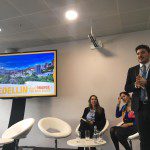
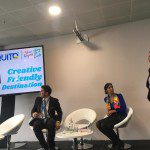
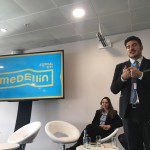
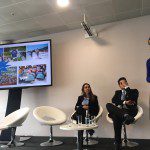
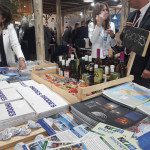
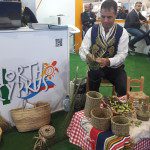
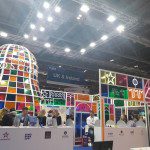
Un centenar de professionals van assistir a la conferència organitzada per Creative Tourism Network® al World Travel Market de Londres el passat 5 de novembre. Per a aquesta cinquena edició, el tema escollit va ser “El turisme creatiu és el nou ganivet suís de la indústria turística?” … I la resposta va ser … “Sí, certament!”

Aquest paradigma reflecteix la ràpida evolució d’aquesta nova tendència turística, des de l’aparició d’una nova demanda fins a una palanca de desenvolupament territorial. Això és precisament el que presenten els ponents a través d’un ampli ventall d’exemples de destinacions que es basen en el turisme creatiu, no només per adaptar la seva oferta a la nova demanda internacional, sinó també per resoldre externalitats negatives i crear una cadena de valor del territori.

Caroline Couret, directora de Creative Tourism Network® (CTN), va destacar l’estratègia per a destinacions com les Îles de la Madeleine – Illes Magdalena (Quebec), Eivissa, Biot (Costa Blava) i Empordanet (Catalunya), que així actuar contra l’estacionalitat oferint nous motius (creatius) per mantenir-se en temporada baixa.

També va esmentar casos de “rebranding” a través del turisme creatiu, com a Recife, Quito o Medellín, que tenen com a objectiu crear un ecosistema entre les indústries creatives i el turisme per atraure nous perfils de viatgers.

A més, va destacar com destins com Loulé (Algarve, Portugal) i Saint-Jean-Port-Joli (Quebec) han dotat els seus programes de turisme creatiu amb centres i laboratoris creatius. Tots dos han transformat edificis històrics en vivers de dissenyadors, respectivament Loulé Design Lab i Le Vivoir, que ja atreuen dissenyadors i dissenyadores de tot el món, desitjosos de col·laborar amb artistes i artesans locals. Aquests èxits demostren que el turisme també pot estimular nous sectors de l’economia.

Couret també ha felicitat ciutats com Gabrovo (Bulgària), Barcelos (Portugal) i Valparaíso (Xile), designades com a Ciutats Creatives de la UNESCO, per la integració del turisme creatiu com a part de la seva estratègia per transformar aquest reconeixement en un motor per a la indústria turística i els sectors creatius.

Les ciutats de Medellín i Quito estaven excel·lentment representades pel Sr. Moisés Vitola Fadul, Coordinador de Promoció del Greater Medellin Convention & Visitors Bureau, i la Sra. Giohana Albuja, cap dels mercats europeus, Quito Tourist Board.

Moisés Vitola va parlar del lideratge de Colòmbia en l’economia taronja, a través de la creació de lleis específiques de suport a l’economia creativa i, més concretament, del programa pioner de turisme creatiu creat pel municipi de Medellín per posicionar-se aquest nou mercat, alhora que crea valor en termes d’apoderament comunitari, cohesió social i creació d’ocupació, entre d’altres.

Per la seva banda, Giohana Albuja va presentar 10 + 1 experiències creatives a Quito, repartides per tota la ciutat, des del centre històric fins a districtes moderns o zones rurals, cosa que els va permetre diversificar l’oferta i el perfil dels viatgers. De fet, l’objectiu d’aquest programa de turisme creatiu és ressaltar la diversitat de Quito a través del seu ric patrimoni immaterial. La seva presentació va ser seguida d’un experiment ChocolateExperience organitzat per Quito Tourist Board.

La sessió també va destacar els reptes i oportunitats que suposa implicar les comunitats locals. Dra. Jan Juntamas, consultora de DASTA a Tailàndia, va destacar la necessitat de conscienciar les persones sobre el potencial del seu patrimoni cultural i de ser creatiu per convertir-lo en una experiència atractiva per a les noves generacions de turistes. Això representa una gran oportunitat en termes d’apoderament. Moisés Vitola també va assenyalar que l’element distintiu de Medellín són els seus habitants, la resiliència i la participació dels quals formen part de l’ADN de la ciutat.

Caroline Couret va concloure que, encara que aquest tipus de turisme requereix un nou esforç i un canvi en les mentalitats, els beneficis en termes de sostenibilitat són infinits, fins al punt que el turisme creatiu utilitza els valors humans i la creativitat com a recursos principals.

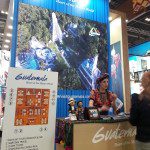
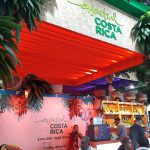
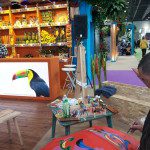
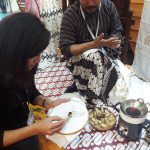
A més de la conferència, el CreativeTourismNetwork® s’ha dedicat a la promoció de les destinacions dels seus membres.

Aviat s’anunciaran nous projectes!


Share

A hundred professionals attended the conference organized by the Creative Tourism Network® within the World Travel Market – London last November 5th. For its 5th edition, the topic focused wasIs the creative tourism the new multi-tool of the tourist industry?” … And the answer was … “YES, definitely!”

Such a paradigm reflects the fast evolution of this new tourist trend, from a new demand to a lever for territorial development. This is precisely what the speakers draw out through a wide array of examples of destinations that are betting on the creative tourism not only to fit the new international demand but also to solve negative externalities and to create a value chain for the territory.

The director of the Creative Tourism Network® (CTN), Caroline Couret, emphasized on the strategy of destinations like Les Îles de la Madeleine (Magdalen Islands, Canada), Ibiza, Biot (French Riviera), or the Empordanet (Catalonia), to fight against seasonality by offering new (creative) purposes of stays, during the low season.

She also pointed out cases of re-branding through creative tourism as in Recife, Quito or Medellín that are betting on the creative industries to attracts new profiles of travelers through the involvement of the artistic and cultural sectors.

Moreover, she highlighted how destinations like Loulé (Algarve, Portugal) or Saint-Jean-Port-Joli (Québec), have even completed the creative tourism program with a creative hub and lab. Both have converted historic buildings, into creative incubators, respectively Loulé Design Lab and Le Vivoir, that are already attracting creatives and designers from around the world, eager to co-create with the local ones. These success stories show how tourism can even arouse new sectors of the economy.

Couret also lauded the relevance of cities like Gabrovo (Bulgaria), Barcelos (Portugal) or Valparaíso (Chile), that have all been designated as Creative City of UNESCO, for integrating the creative tourism as part of their strategy in order to convert this prestigious recognition into a motor for the tourist industry and creative sectors.

The cities of Medellín and Quito were brilliantly represented by Mr. Moisés Vitola Fadul, Promotion Coordinator of Greater Medellin Convention & Visitors Bureau, and Mrs. Giohana Albuja, Manager of European Markets for Quito Tourist Board.

Moisés Vitola talked about the leadership of Colombia for the Orange Economy, through the creation of specific laws that support the creative economy, and more specifically about the pioneering program of creative tourism implemented by the Municipality of Medellín to position itself among this new market, while creating value in terms of communities empowerment, social cohesion and job creation, among others.

On her side, Giohana Albuja presented 10 + 1 creative experiences to be lived in Quito, spread around the whole city, from the historic center to modern districts or rural areas, which enables them to diversify the offer and the travelers’ profiles. The aim of this creative tourism program is indeed to highlight the diversity of Quito while promoting its rich intangible heritage. Her presentation was followed by a ChocolateExperience organized by Quito Tourist Board.

The session also focused on the challenges and opportunities in involving the local communities. Dr. Jan Juntamas, a consultant of DASTA, Thailand, pointed out the necessity to make the locals be aware of the potential of their cultural heritage and to exert their creativity in order to convert it into experiences that are appealing for the new generations of tourists, which also represents a great opportunity in terms of empowerment. Moisés Vitola also stressed that the differential element of Medellín is its people, whose resilience and participation is part of their DNA.

Caroline Couret concluded that even if this kind of tourism requires new effort and change of mindset, benefits are endless in terms of sustainability as it relies on human values and creativity as the main resource.

Besides the conference, the Creative Tourism Network® devoted the three days of the WTM to promote its destinations members. 

New projects will be announced soon!


Share

Circa un centinaio di professionisti hanno partecipato alla conferenza organizzata da Creative Tourism Network® al World Travel Market di Londra il 5 novembre. Per questa quinta edizione, il tema scelto era “Il turismo creativo è il nuovo coltello svizzero dell’industria del turismo?” … E la risposta è stata … “Sì, certo!”

Tale paradigma riflette la rapida evoluzione di questa nuova tendenza turistica, dall’emergere di una nuova domanda a una leva di sviluppo territoriale. Questo è esattamente ciò che gli oratori propongono in una vasta gamma di esempi di destinazioni che si basano sul turismo creativo, non solo per adattare la loro offerta alla nuova domanda internazionale, ma anche per risolvere le esternalità negative e creare una catena del valoLibraryre per il territorio.

Caroline Couret, direttrice di Creative Tourism Network® (CTN), ha sottolineato la strategia per destinazioni come le Îles de la Madeleine (Isole della Maddalena, Quebec), Ibiza, Biot (Costa Azzurra) e Empordanet (Catalogna), che agire quindi contro la stagionalità offrendo nuove (creative) ragioni per rimanere in bassa stagione.

Ha anche citato casi di “rebranding” attraverso il turismo creativo, come a Recife, Quito o Medellin, che mirano a creare un ecosistema tra industrie creative e turismo per attrarre nuovi profili di viaggiatori.

Inoltre, ha sottolineato come destinazioni come Loulé (Algarve, Portogallo) e Saint-Jean-Port-Joli (Quebec) hanno dotato i loro programmi di turismo creativo di centri e laboratori creativi. Entrambi hanno trasformato edifici storici in vivai di design, rispettivamente Loulé Design Lab e Le Vivoir, che già attirano designers da tutto il mondo, desiderosi di collaborare con artisti e artigiani locali. Questi successi mostrano che il turismo può anche stimolare nuovi settori dell’economia.

Couret si è anche congratulato con città come Gabrovo (Bulgaria), Barcelos (Portogallo) e Valparaíso (Cile), designate come Città Creative dell’UNESCO, per l’integrazione del turismo creativo come parte della loro strategia per trasformare questo riconoscimento. una forza trainante per l’industria del turismo e i settori creativi.

Le città di Medellín e Quito sono state brillantemente rappresentate dal Sig. Moisés Vitola Fadul, Coordinatore della promozione dal  Greater Medellin Convention & Visitors Bureau, e dalla Sig.ra Giohana Albuja, Capo dei mercati europei da Quito Tourist Board.

Moisés Vitola ha parlato della leadership della Colombia nell’economia arancione, attraverso la creazione di leggi specifiche a sostegno dell’economia creativa, e più specificamente il programma pioneristico del turismo creativo istituito dal comune di Medellín per posizionarsi su questo nuovo mercato, pur creando valore in termini di responsabilizzazione della comunità, coesione sociale e creazione di posti di lavoro, tra gli altri.

Da parte sua, Giohana Albuja ha presentato 10 + 1 esperienze creative a Quito, sparse in tutta la città, dal centro storico ai quartieri moderni o alle aree rurali, che ha permesso loro di diversificare l’offerta e il profilo dei viaggiatori. In effetti, l’obiettivo di questo programma di turismo creativo è quello di evidenziare la diversità di Quito attraverso il suo ricco patrimonio immateriale. La sua presentazione è stata seguita da un esperimento ChocolateExperience organizzato dall’Ente per il turismo di Quito.

La sessione ha anche messo in evidenza le sfide e le opportunità legate al coinvolgimento delle comunità locali. La Dra. Jan Juntamas, consulente DASTA in Tailandia, ha sottolineato la necessità di sensibilizzare le persone sul potenziale del loro patrimonio culturale e di essere creativi nel renderlo un’esperienza attraente per le nuove generazioni di turisti. Ciò rappresenta una grande opportunità in termini di empowerment. Moisés Vitola ha anche sottolineato che l’elemento distintivo di Medellín sono i suoi abitanti, la cui resistenza e partecipazione fanno parte del DNA della città.

Caroline Couret ha concluso che anche se questo tipo di turismo richiede un nuovo sforzo e un cambiamento nelle mentalità, i benefici in termini di sostenibilità sono infiniti, nella misura in cui il turismo creativo utilizza i valori umani e la creatività come risorse principali.

Oltre alla conferenza, la Creative Tourism Network® è stata dedicata alla promozione delle destinazioni associate.

Nuovi progetti saranno annunciati presto!


Share